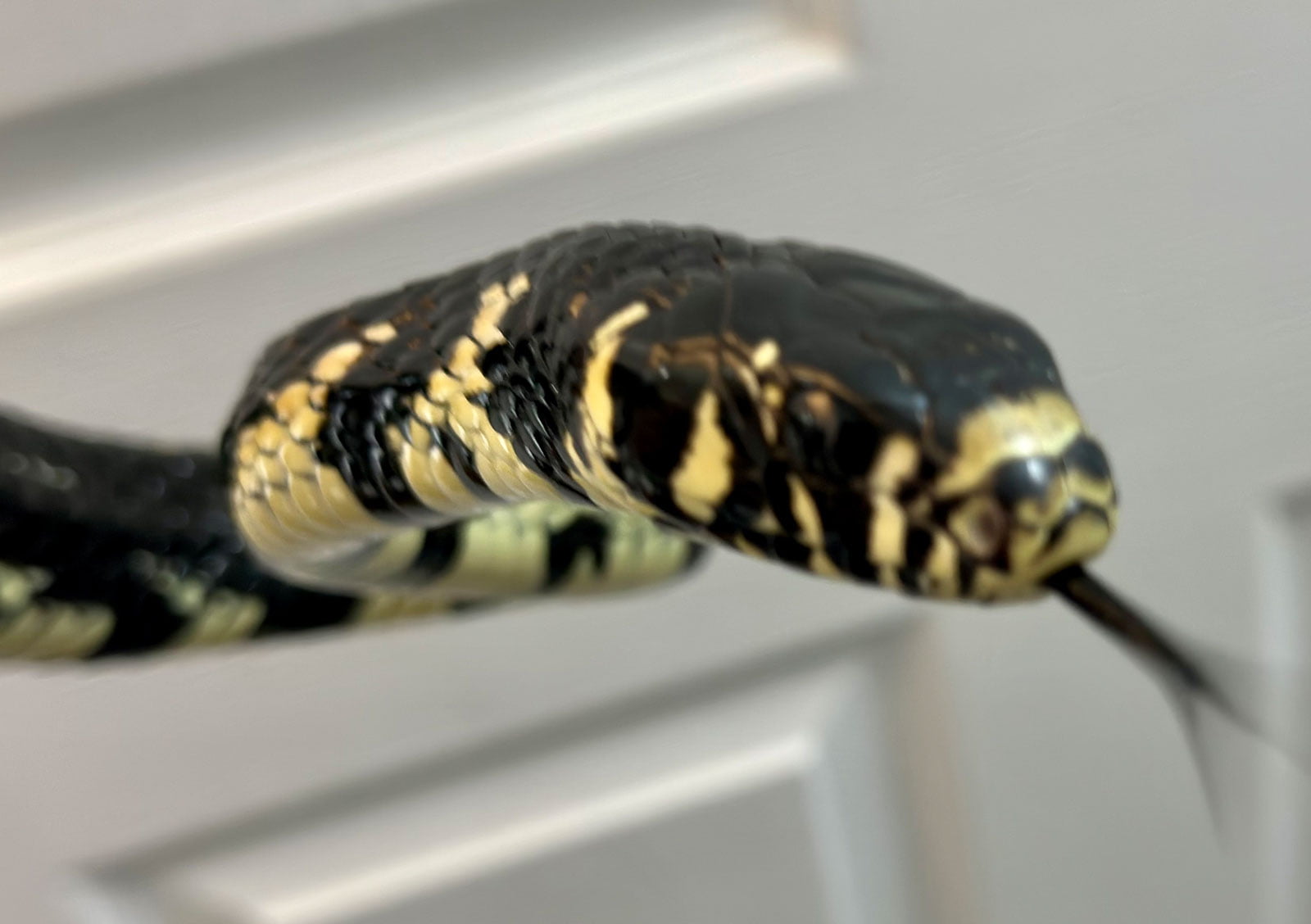
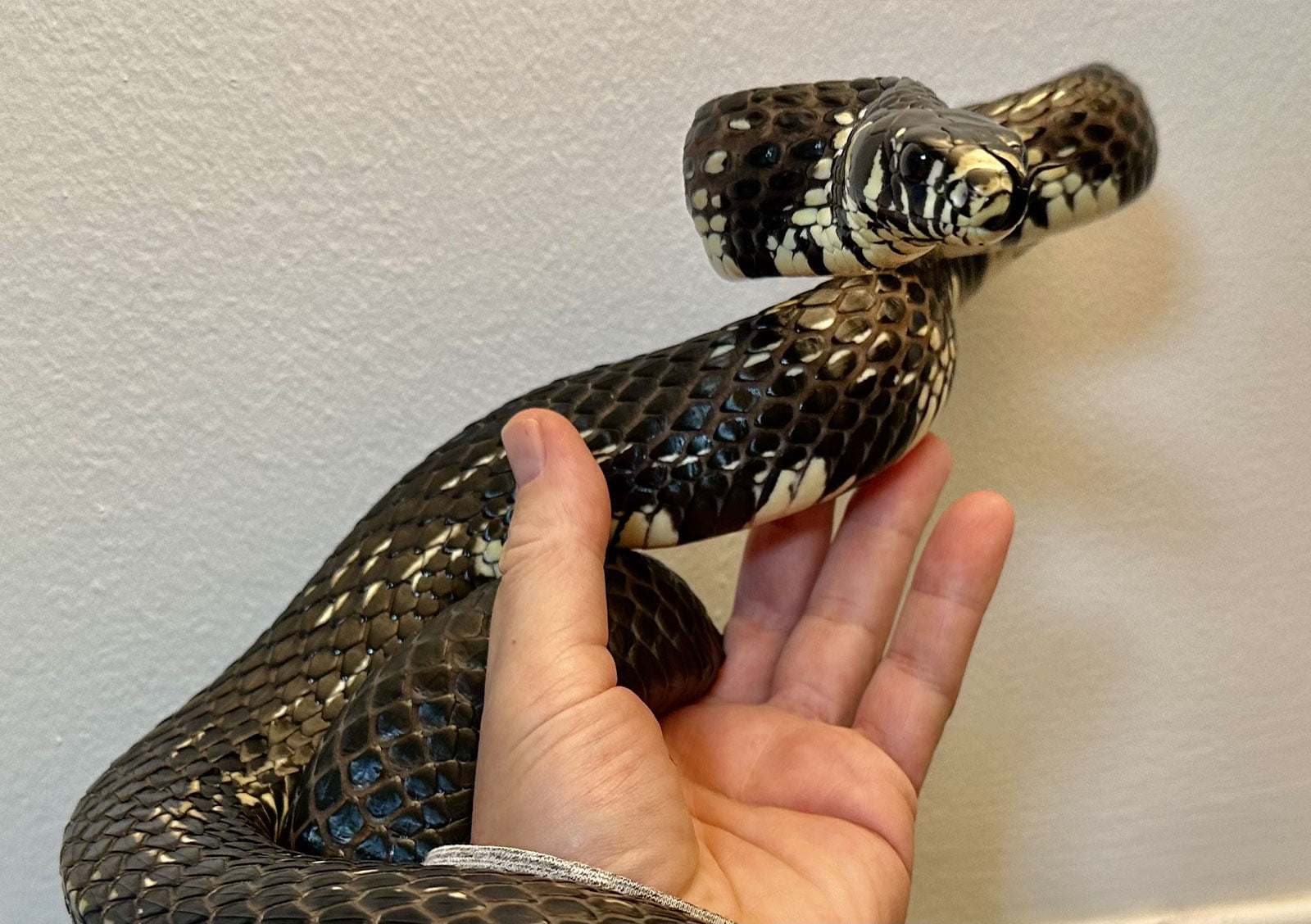
"Bollard" Tiger Rat Snake
Tiger Rat Snake: A Striking Reptile of Southeast Asia
The Tiger Rat Snake (Spilotes pullatus), also known as the Spilotes pullatus, is a visually striking species of non-venomous colubrid snake native to the diverse ecosystems of Central and South America. Below is an extensive overview of this captivating reptile:
Physical Characteristics: The Tiger Rat Snake possesses several distinctive features:
- Coloration: As their name suggests, Tiger Rat Snakes display a mesmerizing pattern reminiscent of a tiger's stripes, characterized by bold, alternating bands of black, yellow, and orange along their slender bodies.
- Size: Adults typically reach lengths between 5 to 7 feet, with exceptional individuals exceeding 8 feet in length.
- Body Structure: Tiger Rat Snakes have elongated, cylindrical bodies with smooth scales, allowing for agile movement and climbing abilities. They possess relatively large heads compared to their body size and are well-adapted for hunting and ambush predation.
Habitat and Distribution: Tiger Rat Snakes are primarily found in a variety of habitats throughout Central and South America, including tropical rainforests, dry forests, savannas, and agricultural areas. They are particularly abundant in regions with abundant prey populations, such as rodents, birds, and lizards. Their range extends from Mexico through Central America to northern South America.
Behavior and Diet:
- Diurnal Activity: Tiger Rat Snakes are primarily diurnal, meaning they are active during the day, hunting for prey and basking to regulate their body temperature.
- Predatory Behavior: As agile hunters, Tiger Rat Snakes use their keen eyesight and quick reflexes to ambush and capture their prey, which primarily consists of rodents, birds, and occasionally other snakes.
- Defensive Mechanisms: When threatened, Tiger Rat Snakes may exhibit defensive behaviors such as hissing, inflating their bodies, and striking; however, they are non-venomous and rely on these bluffing tactics to deter potential predators.
Reproduction: Tiger Rat Snakes are oviparous, meaning they lay eggs to reproduce. Breeding typically occurs in the spring, with females depositing clutches of eggs in secluded locations such as hollow logs or underground burrows. After an incubation period of approximately 60 to 70 days, the hatchlings emerge, displaying vibrant coloration similar to adults.
Conservation Status: The conservation status of Tiger Rat Snakes varies across their range, with some populations facing threats such as habitat loss, fragmentation, and persecution by humans due to misconceptions about their behavior. Conservation efforts, including habitat protection and education about the importance of these snakes in local ecosystems, are essential for their long-term survival.
Captive Care: Tiger Rat Snakes are occasionally kept in captivity by reptile enthusiasts and collectors. Captive specimens require spacious enclosures with appropriate substrate, hiding spots, and climbing structures to mimic their natural habitat. Feeding a varied diet of rodents and occasional birds or lizards is essential for their health and well-being in captivity.
Conclusion: The Tiger Rat Snake is a visually stunning and ecologically important reptile species endemic to Central and South America, showcasing distinctive characteristics and behaviors that make it a fascinating subject for study and appreciation. Understanding the natural history, habitat requirements, and conservation status of the Tiger Rat Snake is crucial for promoting its conservation and ensuring its continued existence in the wild.